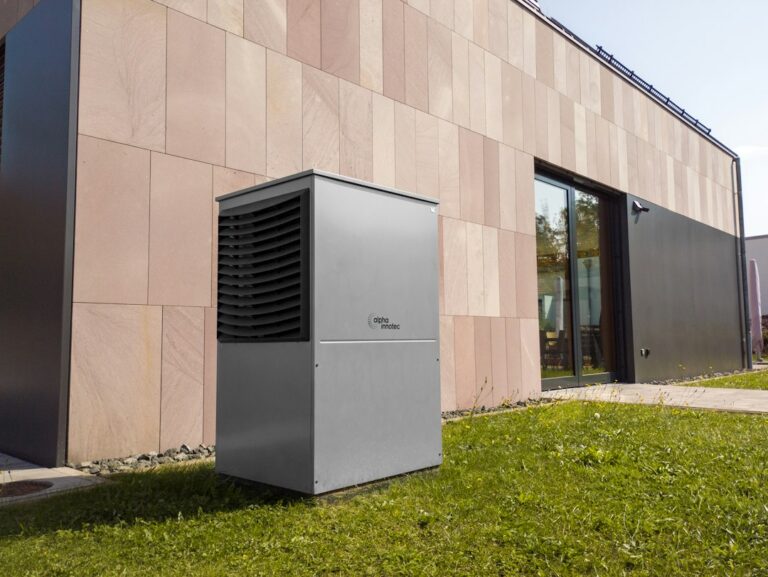
If the house you’re buying has an R-410A air conditioner, it’s legal to keep running it and legal to repair it. The change is on the new equipment side: new residential AC and heat pump systems have moved to lower-impact refrigerants like R-454B. What that means for you is simple. When an older R-410A system finally needs a new outdoor unit and coil, that job is now a full system swap, so you want to know the age and refrigerant of the AC before your inspection period ends.
Here’s how I look at it as an inspector, and what I tell my clients in the Phoenix area.
What actually changed
Under the federal AIM Act, the EPA set a global warming potential limit of 700 for new residential and light commercial AC and heat pump systems, with a January 1, 2025 compliance date. You can see it in the EPA’s restrictions by sector table. The same page notes there’s no installation deadline for systems where all the components were made or imported before January 1, 2025. That’s the leftover R-410A stock sitting in supply houses.
The original rule gave installers until January 1, 2026 to use up that older stock. In May 2026 the EPA finalized a rule that lifts that January 1, 2026 installation cutoff for R-410A equipment made before 2025, according to the Air Conditioning Contractors of America. So you may still see a contractor offer a “new” R-410A system. It’s legal if the equipment is old stock. Just know what you’re buying: brand-new equipment built around a refrigerant that’s being phased down.
Your existing R-410A system is fine to keep
This is the part that gets lost. The EPA’s frequent questions on the HFC phasedown say plainly that you can keep using your air conditioner and keep repairing it. Homeowners can maintain and repair their systems for the useful life of the equipment, including swapping a bad condensing unit or indoor coil for a similar R-410A part.
Two catches from that same EPA page:
- Both halves at once counts as a new system. If the condensing unit and the indoor coil get replaced together, the EPA treats it as a new installation, even if the refrigerant lines stay.
- Supply gets tighter over time. The EPA says availability of HFCs and components “may lessen over time” as they’re phased down. ACCA expects refrigerant prices to climb for contractors because the phasedown schedule didn’t change.
So a 2018 R-410A unit isn’t a problem. It’s a normal AC with years left in it. A 2008 R-410A unit with a leaking coil is a different conversation, and that’s the one you want to have before closing, not in July.
How I read the data plate
Every home inspection I do includes running the AC and recording its age and refrigerant type. Most of that comes off the data plate on the side of the outdoor condenser. You can check it yourself on a showing.
- Refrigerant type. The plate lists it: R-22, R-410A or R-454B. It also lists the factory charge, how many pounds the system holds.
- Manufacture date. Some plates print it outright. On a lot of units it’s hidden in the serial number. On my own old Lennox, the third and fourth digits of the serial number were the year, a 97 for 1997. Brands differ, so if you can’t decode it, the HVAC tech can.
- Size. The model number usually tells you the tonnage. A 42 in there, for example, tells me it’s a three and a half ton unit.
- Two systems, two plates. Bigger and two-story homes in the Valley often have two units. I’ve seen one from 1998 and one from 2018 on the same house. Check both.
- Indoor side. The air handler or furnace and its coil in the attic or closet have their own plate. A newer condenser bolted to an old coil is a mismatch worth asking about.
Still seeing R-22? That refrigerant isn’t being made anymore, so whatever is left is recovered and expensive. When one of those units needs a recharge, it’s usually time to talk replacement. I’ve lived that one on my own house.
R-454B and the A2L label
On newer equipment and new builds, you’ll see R-454B on the plate and an A2L safety class. Per Trane’s explanation of A2L refrigerants, the A means lower toxicity, the 2 means lower flammability, and the L means a low burning velocity. In plain words, it’s mildly flammable, so the equipment is built for it: leak detection systems tied into the controls, warning labels, and red-marked service ports.
Not the end of the world. It’s not something a buyer needs to fear. What it does mean is the install has more parts that need to be done right, and the service tech needs the right tools and training. That’s one more reason to use a licensed HVAC contractor, not a handyman.
Repair or replace on an older Arizona AC
Our systems work harder than most. In Phoenix summers the AC runs for months with barely a break, and the condenser sits in the sun the whole time. So age matters more here. When I see an older unit, this is how I think about it:
- Is it cooling today? A unit that runs and cools is doing its job. Age alone isn’t a defect. I note it so you can budget.
- Signs of a leak. Rust and corrosion on the coil, or a history of recharges. A system that keeps needing refrigerant has a leak somewhere, and topping it off just buys time.
- Which half is failing. If only the condenser or only the coil is bad, a like-for-like R-410A repair is still allowed. If both are tired, you’re looking at a full new system on the new refrigerant.
- The home warranty trap. Don’t count on a seller-paid home warranty to replace an old AC. When I tried it on my own R-22 system, they wanted to refill it and patch it, not replace it. I wrote about that in what happened when I tried to use a home warranty on my old AC.
What to do during your inspection period
- Read the report’s HVAC section first. Look for the age, the refrigerant type and any notes about leaks, rust or poor cooling.
- Get an HVAC tech out for an estimate. If the system is older or showed problems, have a licensed HVAC contractor look at it and price the repair or replacement while you still have time to act.
- Check the license. The Arizona Registrar of Contractors puts it simply: “Anyone can pretend to be a contractor. Check the license.” Here’s how to check an Arizona contractor before you hire.
- Put it on the BINSR. With a real estimate in hand, ask for the repair or a credit. If it were me, I’d lean toward the credit so you pick the contractor and the equipment. See how the BINSR works in Arizona.
- Ask about any “new” system. If the seller just installed one, ask for the invoice, the refrigerant type and the contractor’s license number.
AC checks on home inspections in Gilbert and across Arizona
Our residential home inspection runs the heating and cooling, records the age and refrigerant of every system, and calls out leaks, rust and poor cooling so you know what to budget for. Buying a newer home? Our new construction inspection checks the equipment before you close. We inspect homes in Gilbert, Mesa and across the Valley. Every home inspection includes a termite (WDO) inspection at no extra charge, plus a 1-year termite warranty through Firehouse Pest Control in Gilbert if no active termites are found.
Buying a home? Book your inspection online or call 623-399-0079.
Property Inspections Plus is a Gilbert, AZ home inspection company led by Certified Master Inspector Dan Pierce. We inspect homes across the East Valley, the Phoenix metro and the rest of Arizona. See all of our service areas.