If you keep finding big reddish-brown roaches in the bathroom or kitchen, the problem may not be in the house at all. It may be under it. Those big roaches are usually American cockroaches, and they live in sewer lines. When a drain line is cracked, broken or sitting dry, they have a way in, and a sewer camera is how you find it.
Here are two sewer scans from my YouTube channel. One shows exactly where the roaches were getting in. The other shows why an empty house invites them.
The sewer roach is the American cockroach
The University of Arizona Cooperative Extension calls the American cockroach the largest and most common roach in Arizona, also known as the sewer roach, and says it can get into a home through drain traps from the sewer system. University of Arizona entomologists add that in the Southwest its main habitat is sewer lines, and that broken or uncapped drain pipes inside walls or under floors can be a hard-to-find source. They also note these roaches produce allergens that can cause severe reactions in sensitive people.
So when I see a lot of roaches in a house, I want to know what the drain line looks like. Spraying the baseboards doesn’t fix a hole in the pipe.
What the camera found in an older home
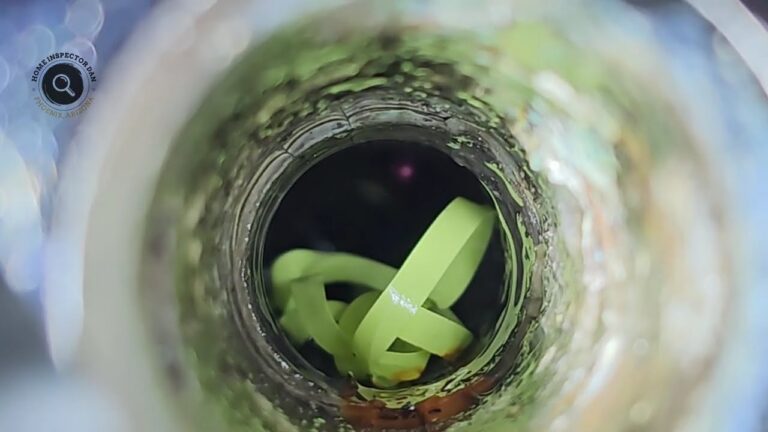
On this older home, the goal was to see whether all of the plumbing had been replaced or just part of it. The first few feet answered a different question. As soon as the camera went in, there were cockroaches everywhere.
Under the house the line was cast iron. The bottom of the pipe was rough and corroded, there was a small crack in the top of the pipe, and the side wall was starting to crumble. Further down, the water level kept rising and debris was sitting in the line. At one junction you could watch the roaches walking in and out of a small crack between the pipes.
I flushed a toilet to clear some of it so we could see, and that’s when we found it: a big break in the pipe at about 53 feet, out in the front yard. That break is where the roaches were coming in. Past the break the pipe wasn’t cast iron anymore. It looked like Orangeburg, and it had gone oblong, which is what that tar-paper pipe does as it fails. In one spot there was no bottom left in the pipe at all. After that, a clay connection was offset, so debris catches on the lip and builds up. The city connection was at about 86 feet.
My call on this one was simple: the whole drain line needs to be replaced sooner than later. That’s a job for a licensed plumber to give you an estimate on, and it’s something you want to know during your inspection period, not after you move in. You can see another failing line in this sewer camera post, and this cast iron scan shows why old drain lines are worth checking.
Why a vacant house draws roaches
The second scan was a vacant home in Mesa. The water was locked off at the meter, so this was a dry scope. There were two bullhorn-style cleanouts in the front yard. One was open. The other was buried a few inches down and surrounded by roots, so we dug it out and cut some roots to get the camera in.
This line was ABS. Somebody had upgraded the pipes at some point, and it was in good shape overall. I’m a lot happier seeing ABS than cast iron, steel or clay. But we still had cockroaches on the pipe wall, one around 40 feet and another on the way back out.
Here’s why. When nobody lives in a house, nobody runs water. The traps dry out and nothing flushes through the line, so roaches from the city sewer move in and make themselves at home. That’s why the University of Arizona recommends keeping drain traps full or capped.
There was also a good-size belly right before the clay city connection, around 44 feet, holding water with high water marks on the pipe. A belly is a low spot. It’s not the end of the world, but if something gets stuck in it, it can back up everything behind it. I explain more in this post on pipe bellies. Once the house is lived in and water is flowing again, I’d have the line hydro jetted, which is basically pressure washing the inside of the pipe, to clear the loose debris.
Signs the roaches are coming from the drain
- Big reddish-brown roaches in bathrooms, at tub drains or near floor drains.
- Roaches in a house that has been vacant, or in a guest bath nobody uses, where the traps have dried out.
- An older home with cast iron, clay or Orangeburg drain lines that have never been replaced.
- Slow drains, backups or a sewer smell along with the roaches.
- Tree roots near the sewer line or a cleanout in the yard.
What to do about it
- Get a sewer camera scan. It’s the only way to see the inside of the line: cracks, breaks, bellies and all. On any older home, book it with your inspection.
- Keep the traps wet. Run water in every sink, tub and floor drain, especially in a vacant house or a bathroom nobody uses. Keep cleanout caps on.
- Clean the drains. The University of Arizona’s pest-proofing guide recommends cleaning drains and sink overflows at least once a year with an enzyme cleaner and hot water, and capping unused sewer pipes.
- Fix the pipe, not just the bugs. If the camera finds a break, call a licensed plumber for an estimate. Pest control can knock the numbers down, but a broken pipe is still an open door.
- Seal the outside too. Door sweeps, weather stripping and sealed pipe openings keep roaches out, along with the scorpions that eat them. More in my post on pests in Arizona attics and garages.
Sewer camera inspections in Mesa, Gilbert and across Arizona
I scope drain lines as an add-on to the home inspection. See the sewer camera inspection page for what it covers, and read more pest finds in the Termite & Pest section of the blog. I inspect homes in Mesa, Tempe and the rest of the Valley. Every home inspection includes a termite (WDO) inspection at no extra charge, plus a 1-year termite warranty through Firehouse Pest Control in Gilbert if no active termites are found.
Buying a home? Book your inspection online or call 623-399-0079.
Property Inspections Plus is a Gilbert, AZ home inspection company led by Certified Master Inspector Dan Pierce. We inspect homes across the East Valley, the Phoenix metro and the rest of Arizona. See all of our service areas.