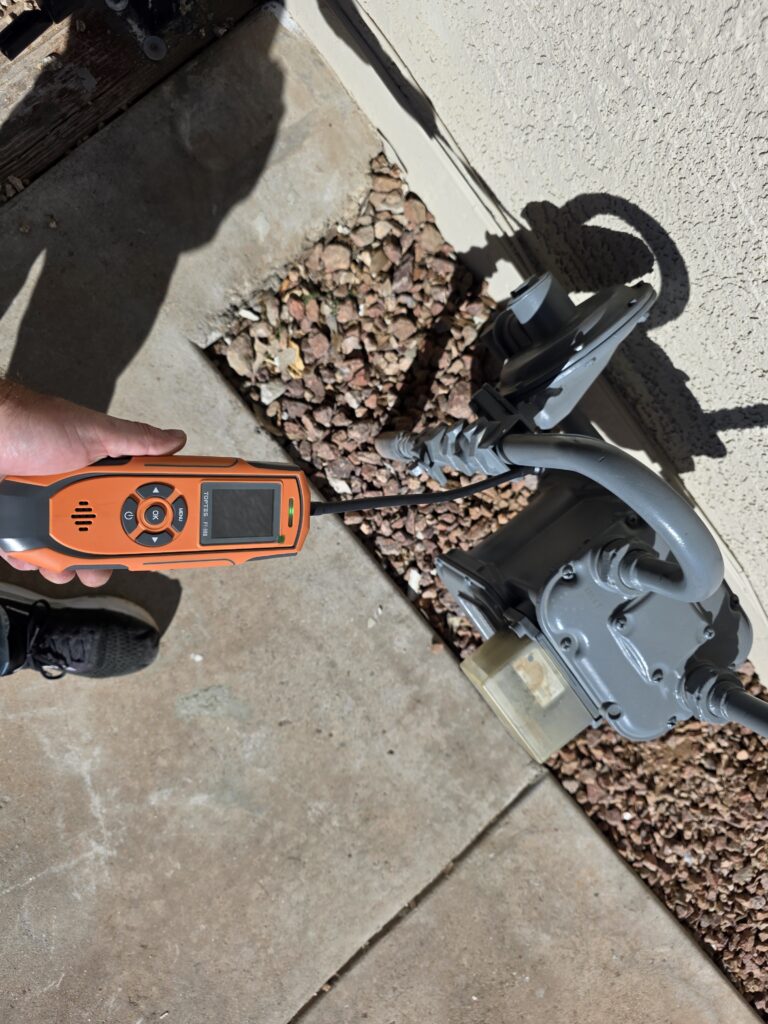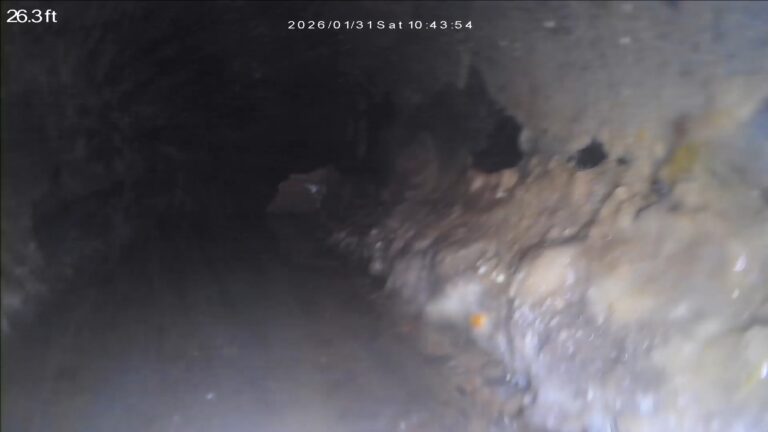
In older Valley neighborhoods, the sewer line between the house and the street is often clay. Sometimes the whole run is clay. Sometimes the house has newer plastic pipe that ties into clay near the property line or at the city connection. Either way, you will never see it without a camera, and it is yours to maintain.
What clay pipe is
Vitrified clay pipe is fired clay, like a very heavy flower pot. The material itself holds up well. It does not rust and sewage does not eat it. The weakness is how it goes together. Clay comes in short sections, so a line has a joint every few feet, and every joint is a place for roots to get in or for one section to shift out of line with the next.
What the camera finds
| Finding | What it means |
|---|---|
| Roots at the joints | Tree and shrub roots follow moisture into the pipe, then grow until they block it. They can be cut out, and they grow back |
| Offset joints | One section has dropped or shifted so the pipe no longer lines up. Solids catch on the lip |
| Cracks and broken pieces | Clay is brittle. Settling soil, roots or traffic above can crack it |
| A gap where plastic meets clay | The transition between old and new pipe has separated or was never sealed well |
| Standing water | A low spot, or a blockage downstream holding water back |
I have written up several of these: a gap between ABS and clay pipe, a broken, collapsed sewer line, standing water in a sewer line and four sewer scopes in Gilbert.
Other old sewer pipe
Clay is not the only old material out there. Cast iron is common under the slab of older homes. Less often, a camera turns up fiber pipe, a tar-impregnated paper product sold under the name Orangeburg that flattens and blisters with age. Any of them can be connected to newer ABS from a remodel or repair.
Signs of trouble
- The lowest drains in the house back up first, usually a tub or shower.
- Backups that come back every few months after the line is cleared.
- Gurgling toilets when the washing machine drains.
- A big, mature tree between the house and the street.
- An extra-green or sunken strip in the front yard.
What I recommend
Add a sewer camera inspection to the home inspection. I run the camera all the way to the city connection when the line allows it, record the video and mark where the problems are. Read are sewer camera inspections worth it. It helps if the cleanouts can be found, which is not always the case on older homes. See sewer cleanouts not located.
Who pays for the line to the street?
In general the homeowner owns and maintains the sewer line from the house to its connection with the city main, including the part under the sidewalk or street. Check with your own city before you close. Gilbert’s rules are on the town’s wastewater page.
Who to call
A licensed plumber or drain contractor for clearing, spot repairs, lining or replacement. Get a written estimate during your inspection period, and check the license at the Arizona Registrar of Contractors. Here is how to use it in your BINSR.
More Arizona plumbing pipe guides
Drain pipe: ABS and PVC and cast iron. Water pipe: copper, PEX, CPVC, galvanized steel and polybutylene and Kitec. Gas: gas pipe.
Plumbing inspections in Gilbert and across Arizona
The visible plumbing is part of every residential home inspection I do, and a sewer camera inspection shows you the drain line you cannot see. Every home inspection includes a termite (WDO) inspection at no extra charge, and your report is delivered within 24 hours. We inspect homes in Gilbert, Tempe, Mesa and across the Valley. See all of our service areas.
Buying a home? Book your inspection online or call 623-399-0079.