A home nobody has lived in has never really been tested. Nobody has flipped every switch from both ends of the room, filled the tub and drained it, or let the sprinklers run for a few months. That’s why so many problems show up in the first weeks after move-in, and why I’d rather find them during the inspection than have you find them after closing.
This house had never been lived in. It looked clean and finished. Then I started running things. Here’s what came up, what each item means, and what I’d do about it on your own new home.
Three-way switches that only work one way
Three-way switches are great. You can turn the kitchen lights on and off from either end of the room. In this house they didn’t work right. The kitchen lights worked from one switch, but once I turned them off at the other wall switch, the first switch stopped doing anything. The living room fan had the same problem with the switch in the hallway. Turn the hallway switch off and the wall switch is dead.
You should be able to turn everything on and off at both switches, not just one or the other. It isn’t dangerous on its own, but it tells me the wiring wasn’t done correctly, and whoever did it needs to come back and fix it. That’s an electrician, and on a new home it goes straight on the builder’s list.
Half-hot outlets wired wrong
A half-hot outlet is one where half of the receptacle is controlled by a wall switch and the other half stays powered all the time. That’s how you plug in a lamp in a bedroom and turn it on from the door. You’ll find them in a lot of Valley homes, and they’re often installed upside down.
Most of the half-hots in this house worked the way they should. One didn’t. The top half had full power, but the switch didn’t control it at all. You’d never notice until you move in, plug in a lamp and wonder why the switch by the door does nothing. Again, not the end of the world. It’s an electrician’s fix, and it’s a lot easier to get the builder to handle it before you close than after.
One more small thing near the garage door: a big globe light fixture sticking well out from the wall right where you walk in. Carry something in from the garage without paying attention and you’re going to smack your head or a broom handle on it, and then it shatters. It’s not a defect, just a poor spot for it. A sconce that sits flat against the wall and points the light down would be a better choice, because that’s where you want to see what you’re walking into.
Cabinets and sinks nobody had used
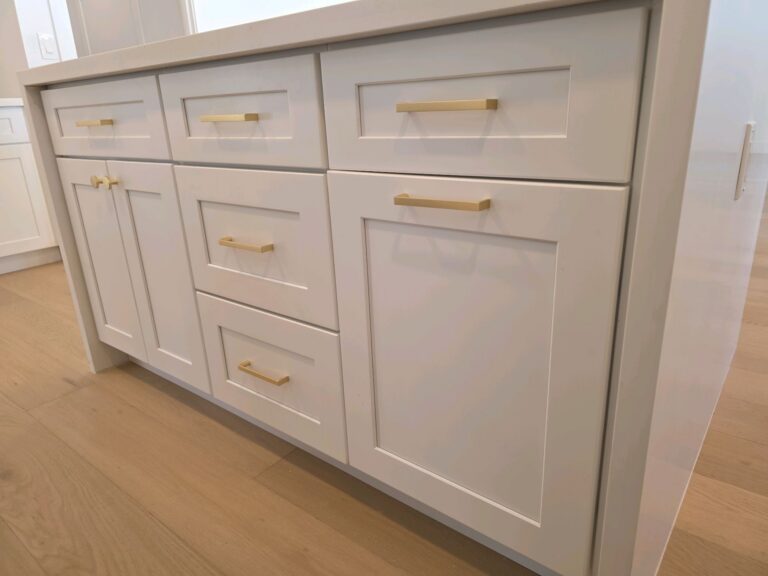
The plumbing under the half bath sink looked good. The vanity itself didn’t. The installer had cut out the entire back panel. That back is part of what holds the cabinet together. Take it out and the box is weaker, and over time it can rack, warp or pull loose.
Then there’s the drawer. Really nice drawer, but it hits the trim panel next to it, so it only opens about halfway. Half of that drawer is unusable. Bumping the vanity out about half an inch, or adjusting the trim, would have solved it. There was also no backsplash on that sink, so any water that splashes up goes right onto the drywall. Drywall and water don’t mix. I’d add tile or a waterproof vinyl backsplash and seal the joint at the top of the vanity so water can’t run down behind it.
What showed up when the water ran
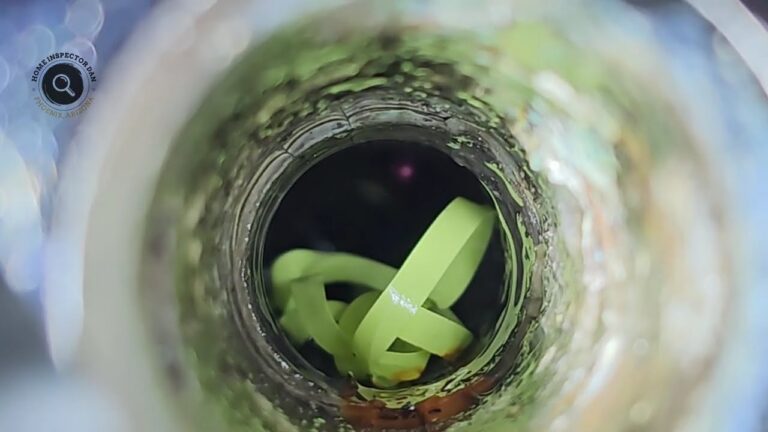
Here’s something you don’t see too often: an access panel for the master bathtub on the second floor. Open that little door and you can see the tub plumbing. I could see a little water up at a fitting, and one of the screws was hardly in. That fitting has seen better days, and it’s likely to leak in the future, so it went in the report for repair.
I had also seen signs from the outside that pointed to past leaking around the tub spout. So I filled the tub, drained it, let the spout run for a while, and went back to check. No extra moisture showed up this time. The gap around the spout had been filled in, but when there’s a gap there, water runs around it and into the wall every time someone takes a bath.
That’s the whole point of running the water. A drain that’s never had a full tub go down it hasn’t been tested. The Arizona REALTORS Buyer Advisory tells buyers to check that the plumbing actually functions, and it puts it plainly: “there is no practical substitute for a professional inspection.”
Sprinklers, a shed and a blocked yard drain
Out back, one sprinkler was spraying right onto the stucco wall. You could see the excess moisture and the sprinkler damage on the wall. A pop-up head nearby couldn’t make up its mind whether it was going up or down. And the backyard drain was blocked by a shed someone had set right in front of it. A shed is great, you need a place for your stuff, but that water needs a way out. With nowhere to go it just builds up, and that corner already had black growth on it.
This is the part I care about most, because water is number one. Water on stucco soaks into the base of the wall. Wet soil along the foundation is exactly what termites are looking for. The University of Arizona Cooperative Extension’s backyard irrigation guide lists “wetting non-plant areas” as a problem to troubleshoot, and a house wall is definitely a non-plant area. I go into more of this in irrigation problems that damage Arizona homes.
The fix here is simple: have a landscape or irrigation contractor adjust or replace the heads so they water plants and not the house, and keep that yard drain clear. If there’s black growth on a wall, don’t guess at what it is. Have it tested.
Why brand new doesn’t mean tested
There are always going to be problems, even with a brand-new home. That’s not a knock on builders. A lot of hands touch a new house, from the electrician to the cabinet installer to the landscaper, and nobody is standing in the finished house running everything at once. The city checks code minimums at certain stages. Nobody checks the finished home for you unless you hire someone, which I wrote about after a new home inspection in Eloy.
You want somebody outside the bubble with third-party eyes on it, so you know exactly what you’re getting and you’re not just taking someone’s word for it. It’s also worth doing your homework on the builder. ABC15’s consumer team suggests researching your builder’s record with the Arizona Registrar of Contractors before you buy.
What to do on your new home
- Get your own inspection before closing. Do it before the builder’s orientation if you can, so the findings go on the punch list while the trades are still around.
- Run everything. Every switch from both ends of the room, every outlet with a lamp or tester, every tub and shower, the dishwasher, and the sprinklers through a full cycle while you watch where the water lands.
- Put it in writing. Send the builder every item with photos and keep copies.
- Call the right trade for an estimate if something isn’t getting fixed: an electrician for switches and outlets, a licensed plumber for leaks, and an irrigation or landscape contractor for heads and yard drains.
- Book an 11-month warranty inspection. Problems that only show up after you’ve lived there a while can still go to the builder. Here’s what one turned up on a one-year-old home.
- Know the state deadline. The Arizona Registrar of Contractors says complaints on new construction must be filed within two years from the close of escrow or actual occupancy, whichever came first.
None of what I found here makes this a bad house. It’s a list of things the builder should fix, and it’s much better to have that list before you move in than to discover it one switch and one bath at a time.
New home inspections in Gilbert and across Arizona
I inspect new builds before closing with our new construction inspection, and again before the first year is up with an 11-month warranty inspection, from Queen Creek to Buckeye. Every home inspection includes a termite (WDO) inspection at no extra charge, plus a 1-year termite warranty through Firehouse Pest Control in Gilbert if no active termites are found.
Buying a home? Book your inspection online or call 623-399-0079.
Property Inspections Plus is a Gilbert, AZ home inspection company led by Certified Master Inspector Dan Pierce. We inspect homes across the East Valley, the Phoenix metro and the rest of Arizona. See all of our service areas.