If you are shopping for a ranch home from the 1950s through the 1970s in Phoenix, Tempe, Scottsdale or Mesa, you are going to run into slump block. It is about as Arizona as a building material gets. It is also tough, low-maintenance and a little misunderstood.
What slump block is
Slump block is concrete block that is pressed slightly before it cures, so the face bulges out a little. The result looks like adobe. Most of it was colored all the way through in tans, browns and reds, so it never needed paint.
It came out of the same local industry that built most of mid-century Phoenix. Superlite, the Phoenix block maker, developed slump block as a warmer-looking alternative to plain gray block, and by 1965 a trade magazine was calling Phoenix “the block capital of America.” Docomomo US tells that history in The Story of Superlite, and Modern Phoenix is a great resource on the neighborhoods and builders of that era.
How these homes are built
The block is not a skin over a frame. The block is the wall. A single layer of masonry sits on the concrete foundation and carries the roof. Steel reinforcing and grout fill some of the hollow cores, and a reinforced course called a bond beam usually runs along the top. How much steel is in there varies with the age of the house and who built it.
Inside, the walls are finished with plaster or with drywall on thin wood strips. There is little or no insulation in them. The roof is wood framing that rests on top of the block.
The good and the trade-offs
| The good | The trade-off |
|---|---|
| Block does not rot or burn, and termites cannot eat it | The roof framing, interior walls, door frames and cabinets are still wood, and termites can travel up through the hollow cores of the block |
| No paint needed when it is left natural | Once it has been painted, it has to stay painted |
| Thick, solid, quiet walls | Little or no wall insulation, and it is hard to add later |
| Very durable | Moving a window, adding an outlet or running new plumbing means cutting masonry |
What I look for
- Stair-step cracks. Cracks that follow the mortar joints up the wall like a staircase. Thin ones that stay the same width are common. Wide ones, or ones where one side has shifted out from the other, need a structural engineer.
- Horizontal cracks along a mortar joint, especially near the top of the wall where the roof sits.
- Cracks at the corners of windows and doors, and rust on the steel lintel that spans the top of the opening. Rusting steel swells and pushes the block apart.
- White powder and crumbling mortar low on the wall. That comes from years of sprinklers, planters and wet soil against the block. See irrigation problems and negative grading.
- Peeling or bubbling paint on block that has been painted. Moisture inside the wall pushes paint off from behind.
- Termite tubes on the foundation and inside at the base of the walls. Every inspection includes a termite inspection.
- Additions. A wood-framed, stuccoed room added to a block house often cracks where the two meet.
- Gaps around replacement windows. See exterior sealant gaps.
The rest of the house is the same age
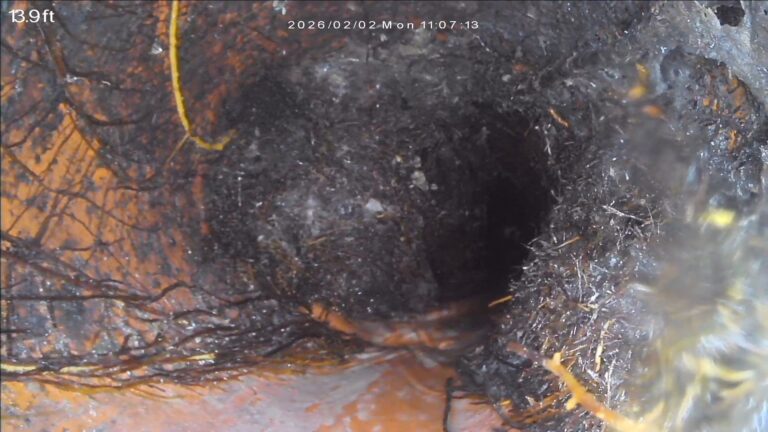
The block is usually the least of my concerns on these homes. What is inside it is 50 to 70 years old too. Plan on a close look at the electrical panel and wiring (see Federal Pacific, Zinsco and aluminum wiring), the drain lines (a sewer camera inspection is worth it on any home this age, and here is one that saved a buyer $10,000), and the roof, which is often shingle or flat. My what to expect by year built tool gives you the short list for any decade.
Who to call
For cracks that are past cosmetic, start with an independent structural engineer. You can look one up at the Arizona Board of Technical Registration. For repairs, use a licensed masonry contractor and check the license at the Arizona Registrar of Contractors. The state’s tolerances for new block work are in Arizona workmanship standards for masonry, and the Concrete Masonry and Hardscapes Association publishes the technical guidance for concrete block.
More Arizona building guides
Walls and structure: concrete block, stucco and wood framing. Roofs: concrete tile, clay tile, asphalt shingles and flat roofs.
Home inspections in Gilbert and across Arizona
The walls, the roof and everything inside them are part of every residential home inspection I do. Every home inspection includes a termite (WDO) inspection at no extra charge, and your report is delivered within 24 hours. We inspect homes in Gilbert, Tempe, Phoenix and across the Valley. See all of our service areas.
Buying a home? Book your inspection online or call 623-399-0079.